Fake Check Scams and Check Fraud: How They Work and What to Do
A bank can make the money from a deposited check available to you in a few days and still take it back weeks later, once the check comes back unpaid. Those are two different events, and almost every fake check scam lives in the gap between them. This guide explains why available funds are not cleared funds, how the deposit-and-send-part-back script works whether it arrives as a job, a sale, or a prize, how stolen paper checks get altered, and what to do the moment you suspect a check you deposited was not real.
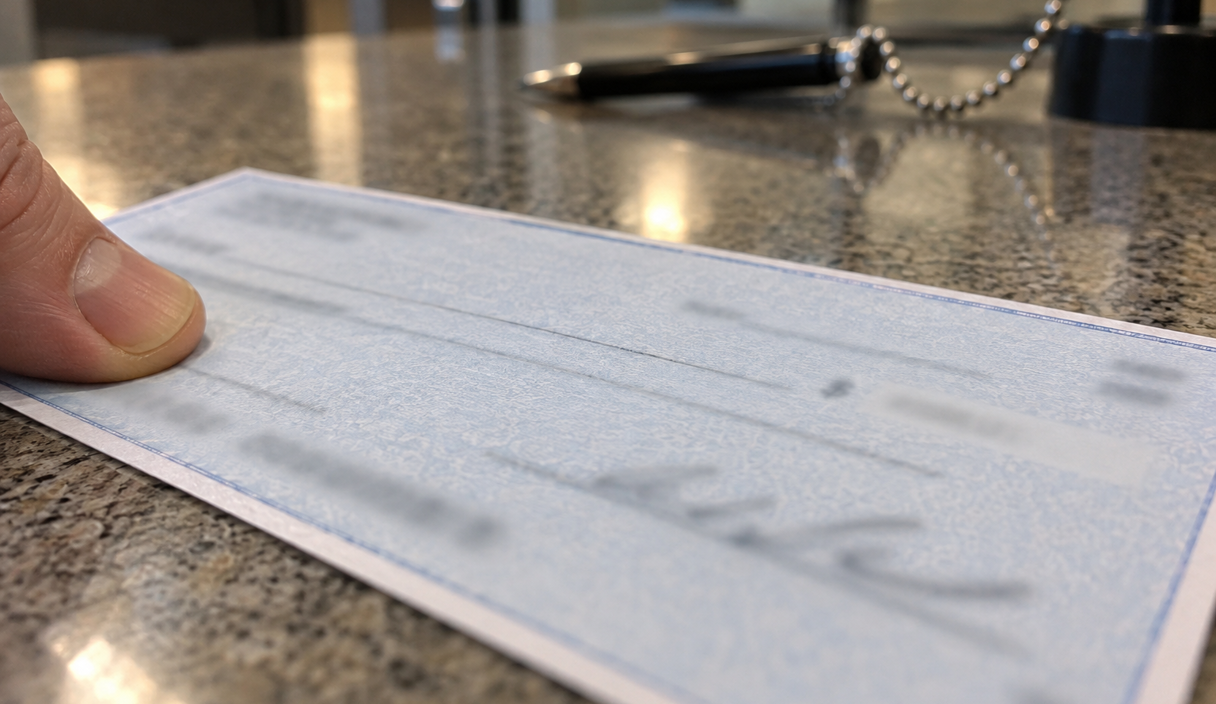
Why available funds are not the same as cleared funds
Federal rules set a maximum amount of time a bank can make you wait before you can use a deposit, which is not the same as the bank confirming the check was good. The Consumer Financial Protection Bureau explains how long a bank or credit union can hold funds you deposited, and those limits are about access, not about the check being honored.
The Federal Trade Commission states the same point plainly in its guidance on how to spot, avoid, and report fake check scams: seeing the funds in your account does not mean it is a good check, and a fake one can take weeks to be discovered. When it is discovered, the deposit is reversed.
The idea this whole page rests on
Available is not cleared. “The funds are in your account” answers a question about access. “The check was paid by the bank it was drawn on” answers a question about whether the money ever existed. The scam only works because those two answers arrive weeks apart, and because the second one is the one that counts.
Who owes the money when a deposited check turns out to be fake
The person who deposited the check does. The CFPB puts it in one sentence in its answer about overpayment requests: if you deposit a counterfeit check or money order, you will not receive any funds, or, if the funds were deposited, you will have to pay them back even if you already withdrew them.
The FDIC says the same thing about counterfeit cashier’s checks in its consumer guidance on fake checks: if the check is later determined to be counterfeit, you will likely be held responsible for the funds that went to the scammer.
That is the whole economics of the scheme. The scammer never had money. What they took was yours, moved out of your account in a form that does not come back, while the deposit that was supposed to cover it was always going to be reversed.
There is a further risk worth naming. Someone who passes along money for a stranger can end up moving criminal proceeds, which carries consequences of its own even when the person had no idea. Our guide on how people get recruited as money mules explains how that happens and how to stop.
The one script behind almost every fake check scam
Someone sends you a check, asks you to deposit it, and asks you to send part of the money somewhere else quickly. The cover story changes. The two moves never do.
The FTC lists the common versions, and the FDIC describes the same pattern in its consumer material:
- A job that pays before you work. Mystery shopping, a personal assistant role, car wrap advertising, or equipment reimbursement. The check covers supplies or a first assignment, and part of it has to go to a named vendor.
- An overpayment on something you are selling. The buyer writes it for too much by accident and asks for the difference back, often for a shipper they chose.
- A prize or an inheritance with fees attached. A check covers the taxes or processing charges, which you pay up front out of your own account.
- A rental or a deposit refund. Money arrives for a place you have not seen, and a portion needs to go to a third party.
Two details separate this from an ordinary transaction. The money out has to travel by a route that cannot be undone, usually a wire, gift cards, a payment app, or cryptocurrency. And it has to go now, before the check has had time to come back.
Both of those exist for one reason: to get your real money out of reach before the deposit reverses. A real employer does not need you to fund the job, and a real buyer does not overpay and then pick the shipper.
How mobile deposit changes the timing
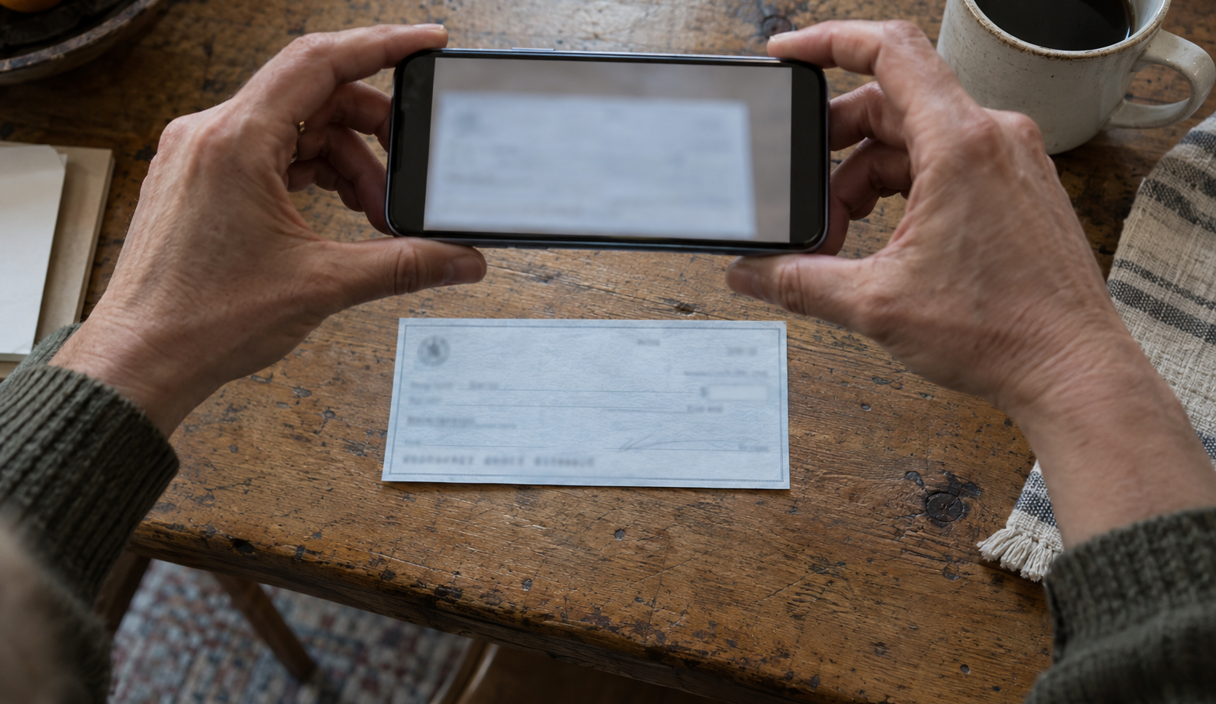
Depositing by phone does not make a check more likely to be real, and in some setups it makes the money accessible faster, which shortens the only window you had to notice. The CFPB notes that the timing rules depend on how and where a deposit is made, including deposits made outside a branch.
Two things follow from that. First, a photo of a check is an image, and the FDIC has warned that an image of a stolen check can be digitally manipulated and reused, so the fact that a deposit went through on the first try proves nothing about the paper behind it. Second, keep the physical check after a mobile deposit rather than discarding it, because it is evidence and your bank may ask for it.
The same caution applies in reverse when someone sends you a picture of a check as proof of payment. A screenshot showing a pending deposit is a claim, not a payment. The only confirmation worth acting on comes from your own bank.
Stolen mail, altered checks, and checks written by you
The other half of check fraud does not involve any check sent to you. It involves checks you wrote, intercepted in the mail and altered so the money goes somewhere else.
The United States Postal Inspection Service, which is the law enforcement arm of the Postal Service, investigates this and publishes guidance on mail and package theft and on mail fraud. Practical habits it points to include not leaving outgoing mail in an unattended box with the flag up, using a collection box or the counter for anything containing a check, and not letting delivered mail sit for days.
A few defenses help on your side of the paper:
- Turn on alerts for checks posting against your account, and read your statement rather than only the balance.
- Write with permanent ink, fill the amount line completely, and avoid leaving blank space.
- Ask your bank about positive pay or similar check verification services if you write checks for a business.
- Follow up when a check you mailed has not been cashed after a reasonable time instead of assuming it will show up.
If a check you wrote was altered or cashed by someone else, report it to your bank right away, ask about a claim for an unauthorized or altered item, and report it to the Postal Inspection Service at uspis.gov/report if it went through the mail.
What to do if you already deposited a check like this
Call your bank before you send anything else, and stop any transfer that has not left. If money already went out, the reports below matter more than they feel like they do.
- Do not send the money, and cancel anything pending. If a wire, a payment app transfer, or a gift card purchase has not completed, try to stop it now. This is the only step with a real chance of saving the amount.
- Call your bank and say the check may be counterfeit. Give the deposit date and amount. Ask the bank to hold the funds, and ask what happens to your account balance if the check is returned unpaid.
- Keep everything. The check itself, the envelope, the messages, the job posting, the listing, the name and address you were given, and any tracking number.
- Report it to the FTC. File at reportfraud.ftc.gov.
- Report it to the FBI. File at the Internet Crime Complaint Center, especially if the contact came through a website, an app, or email.
- Report it to the Postal Inspection Service if mail was involved. Use uspis.gov/report if the check arrived by mail or you were asked to mail anything.
- Ask your bank in writing what you now owe. Get the amount, the date the reversal posted, and the options, so you are not surprised by an overdraft weeks later.
If the bank ends up holding you responsible and you believe that is wrong, the CFPB’s fraud and scams pages explain how to file a consumer complaint, and the OCC’s scam pages cover national banks and federal savings associations. Our guide on how to report a scam and try to recover your money sets out the order of these reports.
How to check before you deposit a check from someone you do not know
The only question that matters before depositing an unexpected check is whether anyone has asked you to send part of it back. If the answer is yes, the check is almost certainly worthless, no matter how convincing the paper is.
Counterfeits are produced with the same printing tools legitimate documents use. The FDIC has pointed out that modern graphics and printing make counterfeit checks hard to detect by eye, so inspecting the watermark is not a reliable test. Checking the story is.
- Ask why money has to leave your account for a transaction where you are the one being paid.
- Look up the company independently and call the number you found, not the number in the message.
- Ask your bank to tell you when the check has actually been paid by the issuing bank, and wait for that answer.
- Be careful when a stranger picks the shipper, the vendor, or the payment method for you.
- Refuse any request to move money on behalf of someone you have not met.
Waiting is the only defense that costs nothing. A legitimate payer can wait for a check to be paid. Someone running this script cannot, which is why the pressure to hurry shows up every single time.
Fake check and check fraud FAQ
How long does it take for a fake check to be discovered?
There is no fixed time. The FTC warns that it can take weeks for a bank to discover that a check is fake, which is why funds appearing in your account is not proof that the check was good.
If the bank already gave me the money, can it take it back?
Yes. The CFPB states that if you deposit a counterfeit check or money order, you will have to pay the funds back even if you have already withdrawn them. Availability rules govern when you can access a deposit, not whether the check was honored.
Are cashier’s checks and money orders safer?
Not by themselves. The FDIC warns that cashier’s checks and official bank checks are also counterfeited, and that advanced printing makes fakes hard to detect. The request to send part of the money back is a more reliable warning than the type of check.
Someone overpaid me and wants the difference back. What should I do?
Do not send anything. The CFPB describes this as a common scam and advises contacting your bank or credit union, telling the marketplace where the sale happened, and reporting it. Forwarding the money can also put you in the position of moving someone else’s criminal proceeds.
Does depositing by phone make a check clear faster?
It can change when funds become available, but it does not change whether the check will be paid. Keep the paper check after a mobile deposit, because your bank may ask for it and it is evidence if the check turns out to be counterfeit.
A check I mailed was altered. Who do I contact?
Contact your bank immediately and ask about a claim for an altered or unauthorized item, then report it to the U.S. Postal Inspection Service at uspis.gov/report if it traveled through the mail. Keep the account statement showing the item.
Keep reading

How to Report a Scam and Try to Recover Your Money
Where to report, in what order, what each agency does with the report, and what recovery realistically looks like.
7 min readRead

Job Scams: How to Recognize a Fake Offer Before Sharing Information or Money
The offer that arrives without an interview, the equipment fee, and the check that clears and then bounces.
6 min readRead

Marketplace Scams: How to Buy and Sell Without Losing Money
The overpayment, the off-platform payment, and the meeting rules that protect a private sale.
6 min readRead