Homeowners Insurance: Coverage, Costs, Deductibles, and Common Exclusions
Homeowners insurance can protect a home, belongings, and household finances from certain covered losses. It does not cover every form of damage, and a policy limit is not the same as a promise to rebuild without conditions. Understanding the coverage parts, deductible, exclusions, and claim duties makes it easier to compare a policy before a loss.
What does homeowners insurance cover?
Most homeowners policies are packages with several coverage sections. The exact form and endorsements control the result. The National Association of Insurance Commissioners (NAIC) homeowners insurance guide describes common sections, but it is not a substitute for your policy.
Dwelling coverage
Dwelling coverage addresses the insured structure and attached parts, such as a roof, walls, and built-in systems, when damaged by a covered cause. The limit should reflect the estimated cost to repair or rebuild, not simply the market value or purchase price. Land is not normally included in a dwelling rebuild estimate.
Other structures
This section can apply to structures separated from the home, such as a detached garage, fence, or shed, subject to a limit and covered causes. Confirm whether a structure is attached or separate and whether special property requires an endorsement.
Personal property
Personal property coverage can apply to belongings such as furniture, clothing, and appliances after a covered loss. High-value categories may have sublimits for theft or loss. Jewelry, collectibles, tools, instruments, computers, and business property may need separate scheduling or extra coverage. Create a home inventory with photographs, purchase records, model numbers, and approximate replacement information.
Loss of use
Additional living expense coverage may help with reasonable extra costs when a covered loss makes the home uninhabitable. It does not necessarily pay every expense or a permanent change in lifestyle. Ask about the limit, documentation, and how long benefits can continue.
Personal liability and medical payments
Personal liability coverage may respond to certain claims that another person brings against an insured for bodily injury or property damage. Medical payments coverage may pay limited medical expenses for a guest under defined conditions, often without the same liability determination. These are separate from damage to your own home. Read the exclusions, defense provisions, and limits.
Policy limits, replacement cost, and actual cash value
A policy limit is the maximum the contract may pay for a particular coverage, subject to deductibles, exclusions, sublimits, and claim conditions. It does not guarantee that the insurer will pay the limit. Ask whether dwelling coverage uses replacement cost, extended replacement cost, or another valuation method, and what conditions apply.
Replacement cost generally refers to the cost to repair or replace with materials of similar kind and quality, without a deduction for depreciation, when the policy requirements are met. Actual cash value generally accounts for depreciation. The definitions and settlement rules in your policy matter more than a label in an advertisement.
Construction prices, local building codes, labor availability, renovations, and inflation can change the cost to rebuild. Tell the insurer about additions, finished basements, solar equipment, accessibility modifications, and other changes. An annual review can identify a limit that no longer matches the home.

What is a homeowners insurance deductible?
A deductible is the amount you generally pay toward a covered loss before the policy pays, although the contract may handle different perils differently. A higher deductible can lower a premium in some circumstances, but it also increases the amount your household must fund after a loss. Choose only a deductible you could pay without taking on harmful debt.
Some policies use separate wind, hail, hurricane, or named-storm deductibles. They may be a flat amount or a percentage of an insured value. Ask exactly when each deductible applies, which coverage it affects, and whether state law imposes special rules. Do not compare premiums until you have compared deductibles.
The separate wind, hail, and named storm deductible
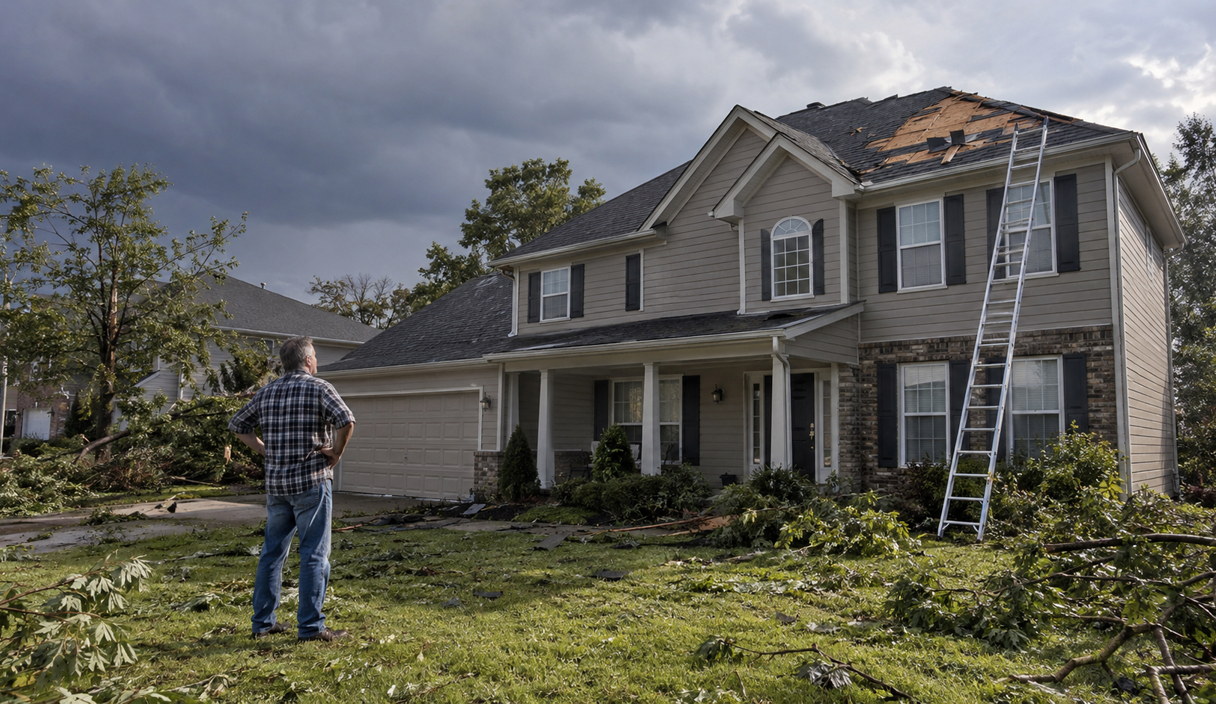
Many home policies carry a second deductible that applies only to wind, hail, or a named storm, and it is often written as a percentage of the dwelling limit instead of a flat dollar amount. It is the deductible people most often meet for the first time with a damaged roof already in front of them.
The percentage is what makes it different. The North Carolina Department of Insurance explains that a windstorm and hail deductible is typically a percentage of the dwelling or personal property coverage shown on the declarations page, and gives the arithmetic: with $200,000 of home insurance coverage, a 1% deductible means paying the first $2,000 of a wind or hail claim. The same policy might apply a flat $1,000 deductible to everything else.
A wind deductible and a hurricane deductible are not the same thing
A wind or hail deductible can apply to any qualifying wind loss. A hurricane or named storm deductible usually applies only when a storm has been named or a warning has been issued, and some states define a window of hours around the storm during which it applies. Read which of the two your declarations page actually shows.
Ask the insurer to state the percentage as a dollar amount for your own dwelling limit, and to say in writing what triggers it. The definition comes from state rule and policy wording rather than from the quote, and a percentage that looks small is a four-figure or five-figure number on a house.
Two related settlement rules travel with this one. Some policies pay for a roof at actual cash value rather than replacement cost once the roof reaches a certain age, and some apply a separate schedule to roof surfaces by material. Neither appears in a premium comparison, and both change what you receive after a storm.
Common homeowners insurance exclusions
Policies commonly exclude or limit certain causes of loss. Flood is a major example: standard homeowners insurance generally does not cover flood damage, and a separate policy may be needed. Earth movement, maintenance problems, wear and tear, infestation, intentional damage, and some water losses can also be excluded or limited. The National Flood Insurance Program’s FloodSmart site explains why homeowners should evaluate flood risk separately.
Water damage is especially dependent on the source. A sudden pipe break, gradual seepage, sewer backup, groundwater, roof leak, and storm surge may receive different treatment. Ask your insurer about water-backup endorsements, service-line coverage, and flood coverage before a loss. Never delay necessary mitigation while waiting for a coverage opinion, but document what you do and keep receipts.
Maintenance is your responsibility. A policy is not a home repair plan for an old roof or a known leak. Regular inspections, prompt repairs, safe storage, smoke alarms, and documented improvements can reduce risk, although they cannot change an exclusion after the fact.
What affects homeowners insurance cost?
Premiums can reflect location, construction, age and condition, replacement estimate, deductible, claims history, selected limits, protective devices, and optional endorsements. Local catastrophe risk and reinsurance conditions can also affect availability and price. A lower quote may reflect less coverage, a higher deductible, or exclusions that deserve attention.
Ask for quotes using the same dwelling estimate, personal property limit, liability limit, deductible, and endorsements. Confirm whether personal property is settled at replacement cost or actual cash value. Ask whether discounts require a monitored alarm, a new roof, a bundle, or another condition you will actually maintain.
What to do after a covered loss
- Protect people first. Address immediate safety and emergency needs.
- Prevent further damage. Make reasonable temporary repairs when safe, and save receipts. Do not discard damaged property before the insurer has a chance to inspect unless safety requires it.
- Notify the insurer promptly. Use the claims number in the policy and record the date, representative, and claim number.
- Document the condition. Photograph or video the damage, keep an inventory, and preserve invoices, estimates, reports, and correspondence.
- Ask questions in writing. Request the relevant policy provision if coverage is denied or limited. Follow proof-of-loss and cooperation deadlines.
You may choose your own contractor, but check what the policy says about estimates, matching materials, code upgrades, and dispute procedures. Do not sign an assignment or broad repair contract without understanding it. If a claim dispute persists, contact your state insurance department or a qualified professional.
Review the policy before renewal
At renewal, compare the declarations page with your current home. Check the insured address, mortgagee, limits, endorsements, deductible, and listed occupants. Report a renovation, home business, rental arrangement, vacant period, new pet, pool, or major purchase when the policy requires it. A change that is harmless under one policy can affect coverage under another.
Ask the insurer what assumptions were used for the rebuild estimate and whether an inflation guard or extended replacement-cost feature has conditions. Keep copies of renewal notices and the policy form. If the premium changes sharply, compare the full protection package rather than switching based only on the monthly price.
Sources consulted
- NAIC: Homeowners Insurance
- National Flood Insurance Program: FloodSmart
- NAIC consumer resources
- North Carolina Department of Insurance: Windstorm and hail
Homeowners insurance FAQ
Does homeowners insurance cover flood damage?
Standard policies generally exclude flood. Flood insurance and other options may be available, depending on location and eligibility. Ask what the policy means by flood and review local risk rather than relying only on a lender requirement.
Does homeowners insurance cover a roof leak?
It depends on the cause, the policy form, maintenance history, and exclusions. Sudden covered damage may be treated differently from wear, age, or a long-term leak. Report the loss and ask for the policy provision.
Should my dwelling limit equal my home’s market value?
Not necessarily. Market value includes land and local market conditions, while a rebuild estimate focuses on structure, labor, materials, and applicable code requirements. Ask how the insurer calculates the limit.
Do I need an inventory of my belongings?
An inventory is not always required to buy coverage, but it can make a claim easier to document. Store photographs and records securely outside the home or in a backed-up account.
Can my insurer cancel or nonrenew my policy?
State law and the policy control when an insurer may cancel or nonrenew. Read notices carefully, ask the insurer for the reason, and contact your state insurance department if you need help understanding your rights.
Keep reading

Renters Insurance: What It Covers, What It Costs, and Whether You Need It
A plain-English guide to personal property, liability, additional living expenses, deductibles, exclusions, and claims.
6 min readRead

Umbrella Insurance: What It Covers, How Much It Costs, and Who Needs It
A practical explanation of umbrella liability coverage, limits, exclusions, and how to compare policies.
6 min readRead

Car Insurance Explained: Coverage, Costs, Deductibles, and How It Works
A practical guide to liability, collision, comprehensive coverage, deductibles, claims, and policy reviews.
6 min readRead