Rental Scams: How to Check a Listing Before Paying a Deposit
A rental scam takes a deposit, a first month’s rent, or an application fee for a home the person collecting the money has no right to rent. The listing is usually real photographs of a real property, and the money is gone before anyone opens a door. Almost every version of this scam breaks on three checks that cost nothing: confirm who owns the property in the county records, see the inside before you pay, and refuse the payment methods that cannot be reversed. This guide covers those checks, the listings that should slow you down, and what to do if money already went out.
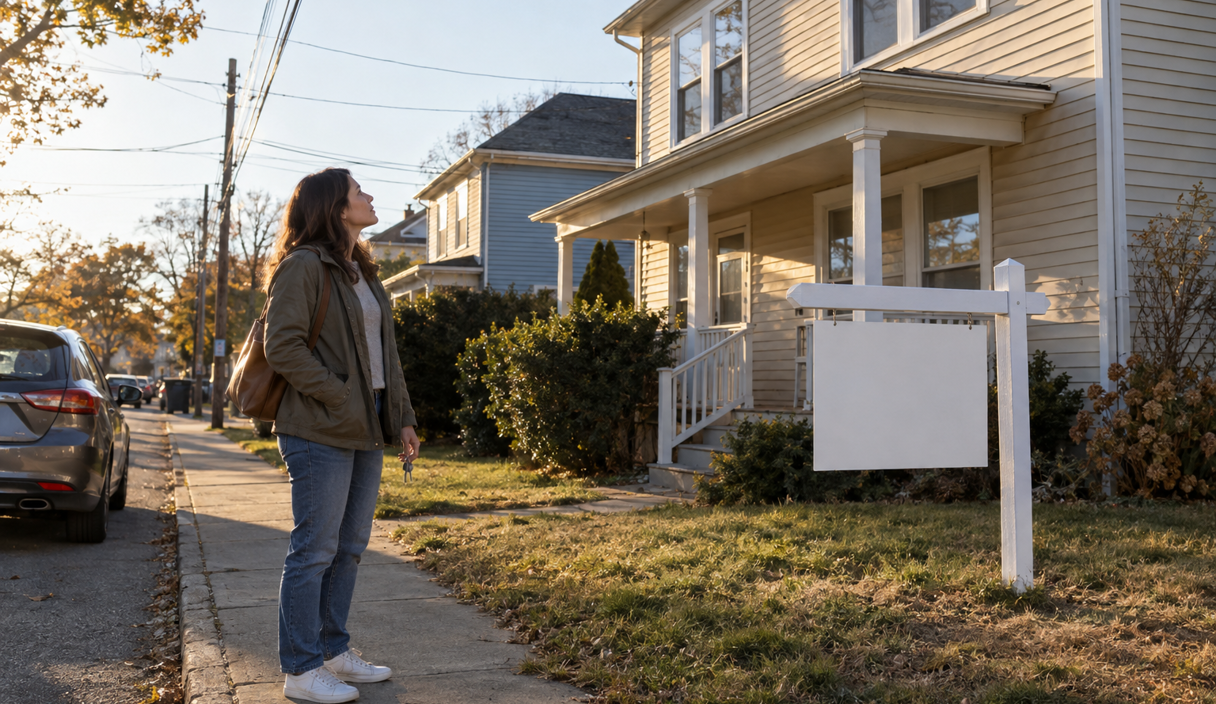
How a rental scam is set up
Most rental scams reuse a real property. Photographs are copied from a genuine listing, sometimes one that is for sale rather than for rent, and reposted at a lower price on a classifieds site, a social network group, or a rental board. The address is real, the pictures are real, and the person answering the messages has no connection to the property at all. The Federal Trade Commission describes hijacked listings and phantom rentals as the two most common forms.
A hijacked listing takes a real advertisement, changes the contact details, and waits for replies. A phantom rental advertises a property that is not available, or that does not exist, often with a story about why the owner is unreachable. A third version rents out a place the person does not control: a home they are currently renting themselves, a foreclosed property, or a vacant unit they simply found.
The story explains the distance. The owner has moved abroad for work, is a missionary or a military officer on deployment, or is handling the rental for a relative who is ill. That is why nobody can show you the unit, why the keys will be mailed, and why the deposit has to be sent before a viewing.
Short term vacation rentals have their own variant, where a listing is moved off a booking platform for a supposed discount. Once payment leaves the platform, the platform’s protections leave with it.
Why a price below market is the first signal
A rent noticeably below what comparable units in the same area are asking is the most common opening move in a rental scam, because a low price is what makes people act quickly and skip the checks. It is a reason to slow down rather than a reason to hurry.
Set your own baseline before you answer any listing. Look at several units of the same size in the same neighborhood and note the range. If one listing sits well under that range with no explanation you can verify, treat the gap as the question to answer.
The pressure that follows is part of the design. You are told several applications are already in, that the owner will hold it only for someone who pays today, or that a deposit is the only way to get a viewing slot. The Texas Attorney General’s office warns that any listing requiring a deposit before you can view the property should be treated as a scam.
Other details worth noticing: the listing text appears word for word on other sites under different contact information, the person will only communicate by text or email and avoids a phone call, or the same address appears elsewhere listed for sale.

How to check who actually owns the property
Ownership is public record in the United States, and checking it is the single most useful step before any money moves. The FTC’s advice is direct: search the city or county tax assessment website to learn who owns a property, then check the landlord’s identification to be sure it matches the record.
The office holding those records is usually the county assessor, the county recorder, the register of deeds, or the county clerk, depending on the state. Most offer a free online property search by address. What you are looking for is the name on the current deed or the tax record for that exact address.
Then compare. If the name on the record does not match the person collecting the money, ask why, and expect a verifiable answer. Legitimate answers exist: a property manager, a leasing company, a trust, a relative with power of attorney. Each of those can be confirmed. Ask a property manager for a business card issued by the company that owns or manages the building, then check their identification against it and call the company through a number listed on its own site.
The check people skip
A signed lease, a scanned identification card, and even a key are not proof that someone can rent you a property. Documents are easy to produce. The county record is the part that is hard to fake, and it is free to look up.
Two more checks take a minute each. Search the property address together with the words rent, scam, or for sale, which often reveals the same photographs posted elsewhere. Search the name of the owner or the rental company with the words complaint or review, a step several state attorney general offices recommend.
Never pay before you see the inside
No legitimate landlord or rental company requires payment for a home you have not been inside. If you are told that a deposit, a holding fee, or the first month’s rent must be sent before a viewing can be scheduled, that is the end of the transaction, whatever reason is given.
A walkthrough is not only about confirming the unit exists. It is where you see whether someone is already living there, whether the keys actually work, whether the condition matches the photographs, and whether the person showing the property behaves like someone who controls it.
If you cannot be there in person, send someone you trust, and have them confirm the address on the building rather than only the block. A video call where you direct where the camera points is better than a recorded video, which can be filmed by anyone. Neither replaces the ownership check.
Watch for the key by mail arrangement. A promise that keys will be shipped once payment is received is a standard element of this scam, and the keys either never arrive or open nothing. Also watch for a lockbox code sent to you before any payment, used to make a property feel accessible when nobody has the authority to let you in.
Read the lease before signing, and confirm that the name on the lease matches the name on the ownership record and the identification you were shown. Ask for a written receipt for every payment, itemized by what it covers.
The payment methods that should end the conversation
The FTC’s rule here is short: if anyone insists you can only pay by wire transfer, gift card, or cryptocurrency, it is a scam. Those methods are chosen because sending them is like sending cash, and once the money is collected there is usually no way to get it back.
That list covers most of what rental scams ask for. Wire transfers through a money transfer service, prepaid or reloadable cards, gift card numbers read out over the phone, cryptocurrency, and payment app transfers to a personal account rather than a business. The Consumer Financial Protection Bureau explains how money transfers work and what to do when one goes to a scammer, and our guide to wire transfer scams covers the recall request.
Paying by check, card, or bank transfer to a verified company gives you a record and, in some cases, a dispute process. It does not by itself make a rental real. The ownership check and the walkthrough still have to happen.
Application fees deserve their own caution. Some are legitimate and cover a credit or background check, though rules vary by state and city. A landlord who asks you to buy your own credit score through a link they send is a pattern the FTC flags, because the link may be there to collect your information or earn a commission.
Money up front for something that arrives later is the shape behind a whole family of frauds. Our guide to advance-fee scams explains why paying first is the trap.
The checks to run before a deposit leaves your account
Run these in order. Each one is free, and together they stop nearly every version of this scam before money moves.
- Compare the rent with similar units nearby. A price well below the local range is the question to answer, not a reason to move faster.
- Look up the address in the county assessor or recorder records and note the owner’s name.
- Match that name to the person collecting money. If it is a manager or a company, ask for a business card and call the company through a number from its own website.
- Search the address and the listing text to see whether the same photographs appear elsewhere under different contact details or as a property for sale.
- Search the owner or company name with the words complaint, review, or scam.
- See the inside of the unit, in person or through a live call where you choose the camera angles, and confirm nobody else is living there.
- Read the lease and confirm every name matches. Ask what the deposit covers, when it is returned, and under what conditions.
- Pay by a traceable method with a receipt, never by wire transfer, gift card, or cryptocurrency, and keep a copy of everything you signed.
If anything on this list cannot be completed, the honest answer is that you do not yet know who you are paying. Walking away from a below market rent is inexpensive compared with losing a deposit.
Scams aimed at housing assistance
People applying for rental assistance are targeted with a specific promise: pay a fee and skip the waiting list. There is no fee that moves an application up a public housing waiting list, and anyone offering one is not connected to the program.
Rental assistance in the United States is administered through local public housing agencies, and the Department of Housing and Urban Development explains how the programs work and how to find the agency for your area. Applications go through that agency, not through a private intermediary who charges for access.
Free help exists if the process is confusing. HUD participating housing counseling agencies provide guidance on rental questions, and their counselors are a safer place to ask than a person who found you through an advertisement.
Two related warnings. A landlord who asks for cash with no receipt, or who asks you to pay for something your lease does not cover, is a problem worth raising with the housing agency. And an offer to sell you a spot in a subsidized building, or a voucher itself, is not something any program allows.
What to do if you already paid
Start with the institution that moved the money. Recovery depends heavily on the payment method and on how quickly it is reported, and no step here guarantees a refund.
- Call your bank, card issuer, or the money transfer company immediately. Say the payment was part of a fraud, ask whether a recall, reversal, or dispute is still possible, and write down who you spoke with and when. A wire that has not yet been collected is the one case where speed sometimes changes the outcome.
- Stop sending anything else, including a payment described as the one that releases the keys or the lease.
- Save the evidence. The listing, screenshots, the full message history, the lease, receipts, phone numbers, and the name and account details you were given.
- Report it to the FTC at ReportFraud.ftc.gov.
- Report it to your state attorney general, which is where rental complaints are handled at the state level and where consumer protection actions start.
- Tell the site that carried the listing so the advertisement can be removed, and file a report with local police, which creates a record you may need for a landlord, an employer, or an insurer.
- File with the FBI at ic3.gov if the money was wired or sent in cryptocurrency.
If you gave out a Social Security number or a copy of your identification on a rental application that turned out to be fake, treat it as an identity exposure and follow the steps for reporting identity theft. Our guide on how to report a scam and try to recover your money explains what each agency does with a report, and why an offer to recover your deposit for a fee is usually the same operation coming back.
Rental scam FAQ
How do I find out who really owns a rental property?
Search the city or county tax assessment or property records website for the address. The office is usually the county assessor, recorder, register of deeds, or clerk, and most offer a free online search. Compare the owner name on the record with the identification of the person collecting money, and ask a property manager for a business card from the company that manages the building.
Is it ever normal to pay a deposit before seeing an apartment?
No. State attorney general offices and the FTC both treat a demand for payment before a viewing as a warning sign, and a listing that requires a deposit just to see the property is a common scam pattern. A holding fee after a viewing, with a written receipt and a signed agreement, is a different situation.
What payment methods should I refuse for rent or a deposit?
Wire transfers through a money transfer service, gift cards, cryptocurrency, prepaid or reloadable cards, and payment app transfers to a personal account. The FTC states that an insistence on these methods means it is a scam, because sending them is like sending cash and the money usually cannot be recovered.
Can I get my deposit back after a rental scam?
Sometimes, and it depends on how the money was sent and how fast the bank or payment company is told. Card and some bank payments have dispute or recall processes. Wire transfers, gift cards, and cryptocurrency are much harder to reverse. No agency can promise a refund, which is why the checks before payment matter more than the steps after.
Someone is renting me a home they say they are managing for the owner. Is that a scam?
Not necessarily, but it needs verification. Ask for a business card from the management company, check their identification against it, and call the company through a phone number listed on its own website rather than one they give you. Then confirm that the company or the owner name matches the county property record.
Keep reading

How to Report a Scam and Try to Recover Your Money
Where to report, in what order, what each agency does with the report, and what recovery realistically looks like.
7 min readRead

Wire Transfer Scams: What to Do Immediately After Sending Money
A wire is built to be fast and final. The recall request, the bank call, and the reports that still matter.
6 min readRead

Advance-Fee Scams: Why Paying First Is the Trap
Loans, grants, prizes, and recovery offers share one shape: money up front for something that never arrives.
6 min readRead