Who Owns This Phone Number and How to Check Safely
There is no public lookup that shows you the owner of any private cell phone number in the United States. You can often find out whether a number belongs to a business, which carrier serves the line, and whether other people have complained about calls from it. None of those answers proves who is actually on the call, because the number showing on your screen can be faked.
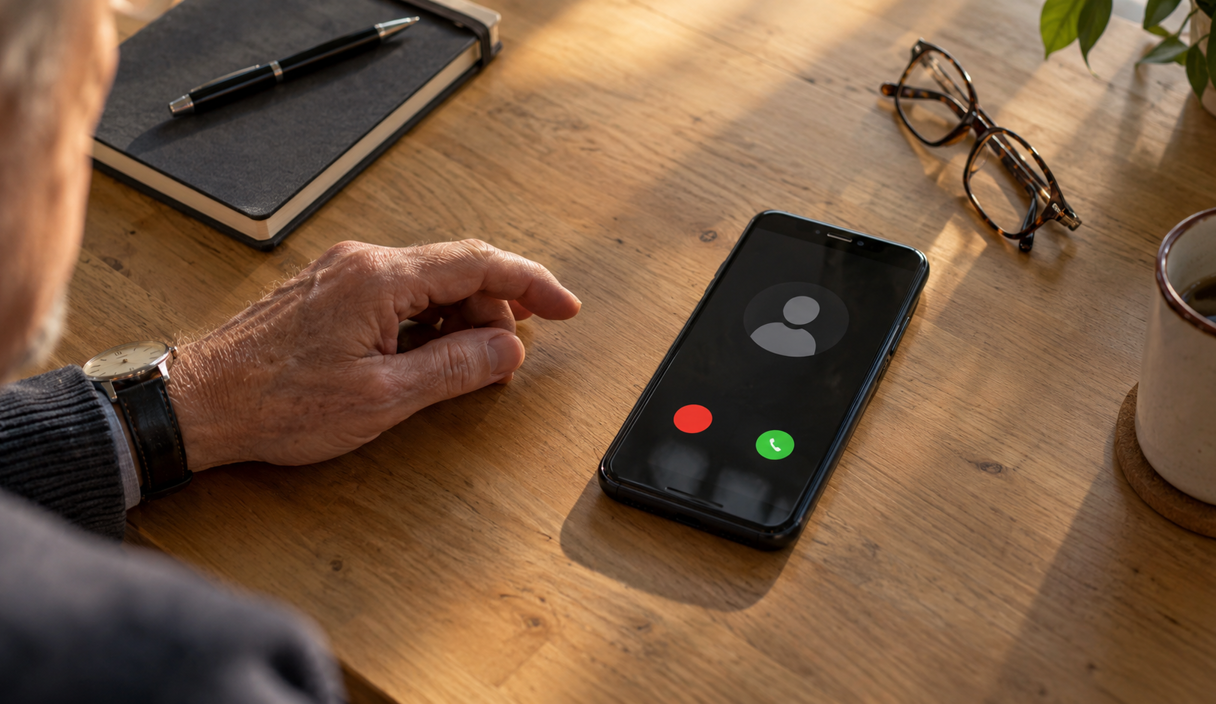
What each lookup can tell you
Everything below is free. Each one answers a piece of the question, and none of them gives you the name and address of the person using a private cell phone.
| Lookup | What it shows | What it does not show |
|---|---|---|
| The company’s own contact page | Whether the number is one the company publishes | Numbers a call center uses only for outbound calls |
| Verified caller label from your carrier | That the calling number passed caller ID authentication | Whether the business behind it is honest |
| Carrier lookup | Which company serves the line today | Who uses the number |
| Searching the number in quotation marks | Pages, listings and complaints from other people | Whether that information is still current |
| Caller ID app | The name other users saved in their contacts | Whether that name is the real one |
| Profile in a messaging app | The photo and name the account chose to display | Whether the photo belongs to whoever uses the number |
A number can change hands, be used by a call center, or show up under a name someone else picked. Finding a name attached to a phone number does not confirm who made that particular call. The more useful question is whether the story you were told can be confirmed without calling that number back.
When the number belongs to a business
The United States has no free public registry that maps a phone number to its owner, so the check runs the other way around. Take the company the caller named, open its official site or its app on your own, and see whether the number that called you is one the company actually publishes. Many businesses list their customer service and fraud lines on a contact page, and your bank prints one on the back of your card.
If you cannot find the number there, that is not proof of a scam. Large companies use outbound lines and outside call centers that never appear on a contact page. It only means the number has told you nothing, so the next step is yours: hang up and reach the company through the channel you already trust.
Even when the number does match, handle billing, purchases and account questions through the company’s own app or published line. Do not hand over information just because the name you found lines up with what the caller said.
The verified caller label
Your carrier may add a label to an incoming call, such as a check mark or the word “Verified” beside the number. That comes from caller ID authentication, the framework the FCC calls STIR/SHAKEN. The carrier that places the call signs the number as legitimate, and the carrier that delivers it checks that signature, so your phone company can confirm that the call really is coming from the number on the screen.
The FCC requires voice providers to use caller ID authentication on their internet-based networks, and it is also what call-blocking and call-labeling services lean on. What the label tells you is narrow but real: the number was not faked. It says nothing about whether the business on the other end is honest, and a call can be perfectly authenticated and still be a sales pitch you do not want.
The absence of a label is not a sign of a scam either. Calls that travel over older equipment may arrive without one, and what your phone displays depends on your carrier and your handset. Either way, do not read a password or a one-time code out loud on a call you did not place. Anything serious can be handled inside the company’s app or through its published number.
Sales calls and the Do Not Call Registry
To get fewer sales calls, add your number for free to the National Do Not Call Registry. It is a list that tells legitimate telemarketers which numbers to leave alone.
Be clear about what it does not do. The FTC says plainly that being on the Registry will not stop calls from scammers, because those calls are already illegal and the people making them do not consult the list. The Registry also does not block anything by itself: it is a list, not a filter. Debt collection, surveys, political calls and calls from companies you already do business with are outside its reach as well. For calls you actually want to stop, the tool is call blocking on your phone, which is covered in how to block unknown numbers.
Finding out which carrier serves the line
Free carrier lookup pages exist, and they will usually tell you which company serves a number today and whether it was recently ported from another one. It is worth knowing that this is available and worth knowing how little it settles: the lookup does not show who uses the line, and the carrier name rarely helps you work out who called. Treat it as a curiosity rather than a check.
What a plain web search shows
Searching the number in quotation marks can turn up the company’s own pages, old listings, or reports from other people. Those results help you notice a pattern of repeated calls, but they can be out of date or pin the number on the wrong person.
Spam reports are opinions from users, not official identification. Use them to decide whether a number is worth blocking, not as grounds to accuse anyone.
Caller ID apps and messaging profiles
Some apps build their names from the contact lists that users share with them. That is why they can be wrong, show a nickname, or keep an old subscriber. Before installing one, read which data it will reach. An app that wants your entire contact list is asking for a trade that may not be worth making, and it hands your friends’ numbers to a company they never chose.
For blocking, these apps can genuinely help. For working out who a person is, the name they display is a guess.
Saving the number and opening its profile in a messaging app shows only the photo and name that account chose to display. Scammers use someone else’s photo and name to look like a person you know, which is one of the scripts covered in the most common online scams.
The number on your screen can be faked
Callers can make a number appear on your screen that is not theirs, including a bank’s or a well-known store’s. Faking caller ID to defraud or cause harm is illegal in the United States, and caller ID authentication exists precisely because it kept working.
An example
The screen shows the same number printed on the back of your card. The caller says he is from the bank’s fraud department, mentions a purchase you did not make, and asks for the code that just arrived by text so he can cancel it. The right number on the screen does not prove the call came from the bank.
If a call asks for information, a code, a password or a payment, hang up. Then open your bank’s app or call the number on the back of your card. If you can, make that call from a different phone, or give it a few minutes first: on some landlines the original call can stay connected while you think you are dialing out.
If you already sent money during a call like that, tell your bank right away that the payment was fraudulent, because what can be done depends on how fast you report it. A card charge can often be disputed; an instant transfer, a wire or a payment app transfer is much harder to pull back, and the steps are in what to do after an instant payment scam. Report the call to the FTC at ReportFraud.ftc.gov, and to the FBI’s Internet Crime Complaint Center if you lost money. The script these calls follow is laid out in what vishing is.
Answer, call back, or block
If the number left no message and you are not expecting a call, there is no obligation to call back. When someone says they are calling for a company, end the call and find the number published on the official site or in the app. If the calls keep coming for no reason, block the number and mark it as spam on your phone.
Do not confirm your full name, your Social Security number, your address or your bank details in order to find out who is calling. Whoever made the contact should be able to explain the reason for it without asking you to hand over information first.
Phone number lookup FAQ
Is there a free way to find out who owns a phone number in the United States?
Not for a private cell phone. There is no free public registry that maps numbers to the people using them. What is free is the work around it: check the number against the company the caller named, see whether your carrier marked the call as verified, search the number in quotation marks, and look at what a caller ID app displays, knowing that the last one is a guess drawn from other users’ contact lists.
The number on my screen matched my bank’s. Does that mean the call came from the bank?
No. Callers can make another company’s number appear on your screen, and faking caller ID to defraud or cause harm is illegal in the United States. Whatever the screen says, end the call and dial back using the number printed on the back of your card or shown inside the bank’s own app.
What does the verified label on a call actually mean?
It means your carrier could confirm that the call really came from the number displayed, through the caller ID authentication framework the FCC calls STIR/SHAKEN. That is the whole of it. A verified call can still be a sales pitch you do not want, and a call without the label is not automatically a scam, since older equipment can deliver a call without one.
Should I call an unknown number back?
If nobody left a message and you are not waiting on a call, there is no need. If you do want to know what it was about, do not use the number that called you. Look the company up yourself and call the number published on its site or shown in its app.
Are the spam reports I find when I search a number reliable?
They are useful and they are not identification. They are written by other people who received calls, so they can be out of date or pin the number on the wrong subscriber. They are a good reason to block a number. They are not grounds to accuse anyone.
Is a caller ID app worth installing?
For blocking and labeling calls, it can genuinely help. For working out who a person is, the name it shows comes from what other users saved in their own contacts, so it can be a nickname, an old subscriber, or simply wrong. Before installing one, read what data it asks for: an app that wants your whole contact list is handing your friends’ numbers to a company they never chose.
Sources
The services and rules described here were checked on September 22, 2026 on these pages:
Keep reading
How to Block Unknown Numbers on Android and iPhone
Where the settings live on each phone, what they actually block, and what blocking does not fix.
9 min readRead

Impostor Scams: Government, Business, and Family Impersonation Explained
One mechanism behind many scams: someone you trust, a problem invented, and a payment that cannot be undone.
9 min readRead

How to Report a Scam and Try to Recover Your Money
Where to report, in what order, what each agency does with the report, and what recovery realistically looks like.
9 min readRead