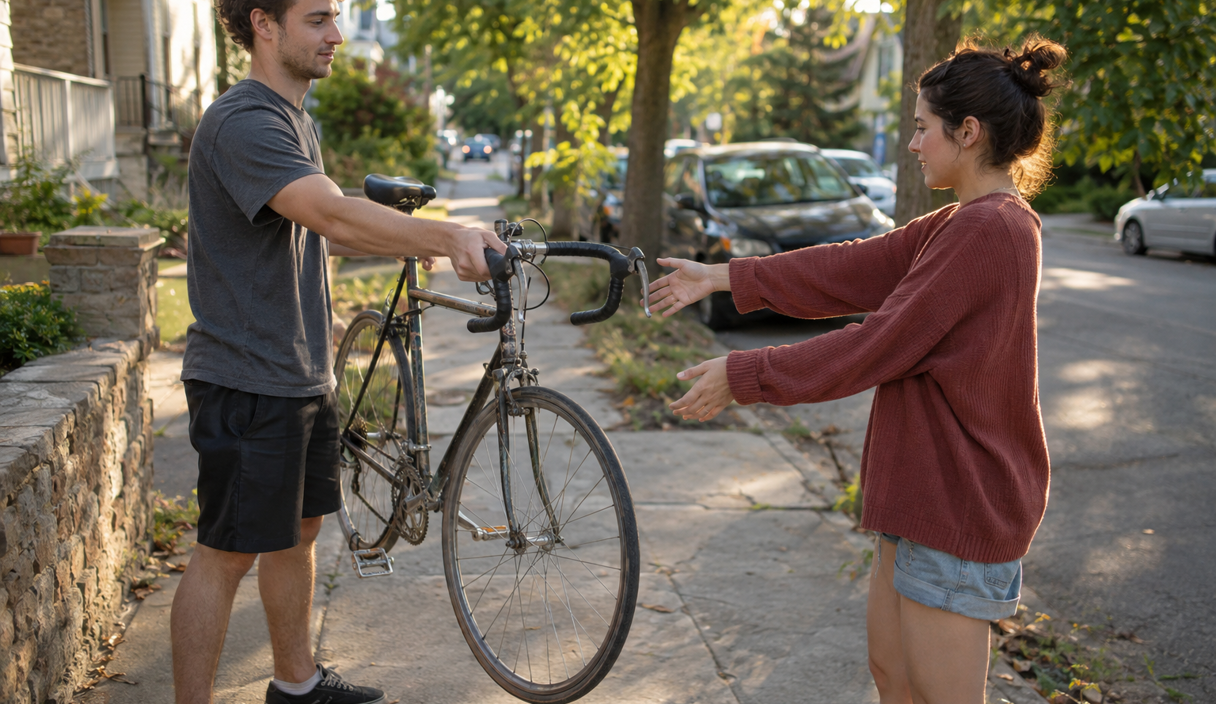
Paying a friend versus paying for a purchase
Venmo treats a payment to a friend and a payment for goods or services as two different things, and only the second can be covered by Venmo Purchase Protection. The difference is a toggle on the payment screen that most people never touch.
When you pay another personal profile, Venmo’s help page on buying from personal profiles explains that a toggle may appear below your payment method. Turning it on tells Venmo you are paying for an item or service, and the payment is then covered by the program if it is eligible. Payments to a Venmo business profile, purchases with the Venmo Debit Card, in-app checkouts and QR code checkouts can also be covered.
Marking a payment as a purchase costs the buyer nothing. The seller pays. Venmo’s fee page, read on September 29, 2026, lists a seller transaction fee of 2.99 percent when a payment to a personal profile is identified as goods and services, and 1.9 percent plus 10 cents for most payments to a business profile. On a 600 dollar sale to a personal profile, 2.99 percent comes to 17.94 dollars.
That fee is the reason scammers ask buyers to send money as friends. Venmo’s page on common scams lists it as a tactic: the scammer asks you not to mark the payment as a purchase, which leaves you outside the program that would let you file a claim.
When Venmo Purchase Protection can refund a purchase
Venmo Purchase Protection can refund the full price plus original shipping when an eligible purchase never arrives or is significantly different from what the seller described. Venmo decides each claim, and the Venmo User Agreement sets conditions that matter before a problem happens.
The Purchase Protection page gives examples of covered problems: you bought a book and got a DVD, an item described as authentic turned out to be a knockoff, two of three items arrived, or a photographer took a deposit and never showed up. It also lists what is never covered, including payments not tagged as purchases, donations and crowdfunding, vehicles, real estate, financial products and gambling.
Under the User Agreement, as read on September 29, 2026, a buyer’s claim also depends on these conditions:
- You open the dispute within 180 days of the purchase date.
- You first tried to solve the problem directly with the seller.
- You answer Venmo’s requests for documents within the time it gives you.
- You have not already recovered the money another way, such as a dispute with your bank or card issuer.
- For an item not received, the claim is not eligible if you picked the item up in person, with an exception for in-person payments to a business profile or marked as goods and services, and Venmo may side with a seller who shows proof of delivery.
A purchase claim is not the same as an unauthorized payment
If someone used your account without permission, that is a separate claim under Venmo’s protection from unauthorized transactions, and federal rules apply to it. The CFPB’s answers on electronic fund transfers confirm that payment apps that are not banks must follow the error resolution and liability rules of Regulation E for unauthorized transfers.
Scams that target buyers
Buyers lose money on Venmo mainly by paying first, as a friends payment, for something that never ships. Venmo says these scams are especially common with items that are rare, popular or hard to find, such as gaming consoles, sneakers, concert tickets and phones.
Here is a recreated conversation of the kind buyers describe. The people and the tickets are invented.
- “Two floor seats, face value, I just can’t go anymore.” The price is fair, not suspiciously low, which makes the offer feel safe.
- “Can you send it as friends and family? The purchase fee eats my margin.” This is the request that removes your protection, and Venmo names it as a scam tactic.
- “Here’s the transfer confirmation, check your email in 10 min.” A screenshot of a transfer or a shipping label proves nothing. Venmo warns that scammers send fake shipping information and screenshots.
- “Someone else is ready to pay right now.” Pressure to decide in minutes is meant to stop you from asking for a purchase payment or checking the seller.
If a seller refuses a payment marked as a purchase, look for the item somewhere else. The guide to online shopping scams covers the checks that expose a fake store, and the guide to marketplace scams covers local sales and meetups.
Scams that target sellers
Sellers lose money on Venmo when they hand over an item for a payment that is fake, or real but later taken back. The first is a trick with email, and the second is a trick with stolen payment methods.
The payment that only exists in an email
A buyer shows you an email or a screenshot saying the money was sent. Venmo says scammers send screenshots of fake emails, and that another common story is a payment that will only be released once you upload a shipping number. Venmo does not have that feature. Venmo also says it only emails from addresses ending in venmo.com. Before you hand over a bike at the curb or tape the box shut, open the Venmo app and check your balance and transactions there.
The payment made with someone else’s card
The payment does arrive, and you ship. Weeks later it disappears, because the buyer paid with a stolen card or bank account and the real owner reported it. Venmo’s User Agreement allows it to reverse a payment when the funding transaction is reversed or the payment was unauthorized, and it can recover that amount from the person who received it. The seller ends up without the item and without the money.
Venmo’s seller protection can apply to eligible purchase payments, but only under strict conditions: usually a physical item shipped within 7 days of payment unless the buyer agreed otherwise, proof of shipment or delivery, and a payment marked as eligible on the transaction details page. A friends payment has none of that.
Buyers who say they paid twice, or who offer a paper check for more than the price, are running an overpayment trick: the check bounces later and the bank takes the money back from you. The steps are in how fake check scams work, and the FTC’s advice for people selling online is direct: don’t accept a mobile payment from someone you don’t know, and never deposit a check for more than the selling price.
A stranger sent you money by mistake. Can they take it back?
Yes, a payment you received can be reversed later, and that is exactly what the scam counts on. The scammer pays you with a stolen card, asks you to send the money back as a new payment, and after the card owner reports the charge, Venmo removes the original payment from your account. You have then lost your own money.
Venmo’s page on payments from strangers says not to return the payment on your own and not to move the money. Contact Venmo Support instead, so the payment can be reversed through Venmo. Blocking the sender prevents a second attempt.
Scammers also copy a friend’s name and photo to ask for money back. Check with your friend by text or phone outside Venmo before you return anything. When the fake overpayment comes from someone posing as a company, the guide to refund scams covers that version.
Fake Venmo support: calls, texts and prize messages
A call or message from someone claiming to be Venmo is a scam when it asks for your verification code, remote access to your phone, or a payment to verify your account. Venmo lists all three as things its agents never do.
The common call works like this. The scammer tries to sign in to your account, triggers the code Venmo texts to your phone, and then calls you pretending to be Venmo Support to ask you to read the code back. Venmo’s scam page says a Venmo agent will never ask for this code under any circumstances. It also says Venmo will never ask to access your device remotely, ask you to install another app, create an account on your behalf, or tell you to send money to verify your account.
Texts are the other route. A message says you won money from Venmo, or copies Venmo’s sign-in code message but adds a link. Venmo’s real code message has no link. The FTC’s guide to fake messages recommends forwarding scam texts to 7726 and reporting them at ReportFraud.ftc.gov.
The last version is a phone number you found yourself. People search for a company’s support line, reach a number run by scammers, and are asked to pay for help by sending money to a Venmo user. Type the company’s address yourself and use the contact page on its website. Support from a real company rarely costs anything.
What to do if you already paid a scammer on Venmo
Contact Venmo right away through the app, and open a dispute if the payment was marked as a purchase. What Venmo can do depends on how the payment was sent, so the order below starts with the steps that keep the most options open.
- Contact Venmo Support from inside the app: Me, then Settings, then Get Help, then Chat With Us, and ask for an agent. Do not use a support number from a search result or a message. The FTC’s page on payment apps points to the same in-app chat.
- If the payment was marked as a purchase, open a dispute: in the Me tab, select the transaction, tap Need Help? and choose what happened. You have 180 days from the purchase date.
- If money left your account without your permission, or you gave someone your code, say so clearly. That is an unauthorized transaction claim, different from a purchase dispute, and it should be reported immediately.
- Change your Venmo password and the password of the email tied to it, from a device you trust, and check which phones and devices are signed in.
- Save the evidence: the listing, the conversation, the seller’s username, the transaction details and any screenshots you received.
- File a report on the FTC’s site, ReportFraud.ftc.gov, and with the FBI at ic3.gov. Which one to file first, and what happens to each report, is in the guide to reporting a scam.
If you paid as friends and it was not an unauthorized transaction, a refund is unlikely, and no one can promise one. You can still report the scammer’s account to Venmo so it can act on it, and if you believe Venmo mishandled an unauthorized transaction claim, you can file a complaint with the CFPB. A stranger who writes later offering to get the payment back for a fee is a common follow-up scam, and the guide to instant payment scams shows what that second contact looks like.
Venmo scam FAQ
Can someone take back money they sent me on Venmo?
Not by pressing a button, but a payment can be reversed later. Venmo’s User Agreement lets it reverse a payment when the card or bank that funded it reverses the charge or the payment was unauthorized, and it can recover the amount from the person who received it.
What happens if a scammer sends you money on Venmo?
Usually a request to send it back follows. Don’t return it yourself and don’t move it. Venmo asks you to contact Support so the payment can be reversed through Venmo, which protects you if the money came from a stolen card.
How much will Venmo take out of a $600 goods and services payment?
The seller pays the fee, not the buyer. Venmo’s fee page, read in September 2026, lists 2.99 percent for goods and services payments to a personal profile, which is 17.94 dollars on 600 dollars. Business profiles pay 1.9 percent plus 10 cents on most payments.
Does Venmo refund you if you get scammed?
It can, when the payment was an eligible purchase and the item never arrived or was significantly not as described, if you file within 180 days. Friends payments are not covered by Purchase Protection. Unauthorized payments from your account are a separate claim with federal protections.
Is it safe to sell to strangers on Venmo?
It is risky. The FTC advises not accepting a mobile payment from someone you don’t know, and Venmo warns that payments made with stolen cards can be removed from your account. If you do sell, ask for a purchase payment, confirm it in the app and keep proof of shipment.
Can Venmo be trusted?
Venmo works as intended when you pay people you know. The risk comes from using it with strangers: a payment sent as a friends payment usually cannot be recovered, and a payment you receive can be reversed later if it was made with a stolen card. For purchases from people you do not know, mark the payment as a purchase so Venmo Purchase Protection can apply, or use a credit card.
Can someone get into my bank account through Venmo?
A scammer cannot reach your bank account just by knowing your Venmo username. The risk is someone taking over your Venmo account, usually by getting your password or the verification code Venmo texts you, and then sending payments funded by your linked bank or card. Never share that code, set a Passcode in the app, and tell Venmo right away about any transaction or account change you did not make.
What is the 4-digit code on Venmo used for?
The short code Venmo asks for is usually the Passcode you can set under Me, Settings, then Face ID and Passcode on iPhone or Passcode on Android. Venmo says that once it is on, the app asks for it every time it opens and may ask for it when you send a payment. It is different from the verification code Venmo texts when you sign in on a new device, which you should never give to anyone.
Keep reading
Marketplace Scams: How to Buy and Sell Without Losing Money
The overpayment, the off-platform payment, and the meeting rules that protect a private sale.
6 min readRead
Instant Payment Scams: What to Do When the Money Is Already Sent
The call to make in the first hour, what the rules do and do not cover, and why no one can promise the money back.
14 min readRead

How to Report a Scam and Try to Recover Your Money
Where to report, in what order, what each agency does with the report, and what recovery realistically looks like.
7 min readRead